Category: impeachment

When May the State Use Evidence of a Defendant’s Silence Before Trial?

A couple of weeks ago, I wrote about the prohibition against the State commenting on a defendant’s failure to testify, or, in other words, a defendant’s silence at trial. Such comments are disallowed as they abridge a defendant’s federal and state constitutional rights not to be compelled to give self-incriminating evidence. This post addresses a related issue:  When and how may the State in a criminal trial use evidence of a defendant’s silence before trial to establish a defendant’s guilt or impeach a defendant’s credibility? (This is not the first time we have written about this topic on the blog. Jessie Smith did so here in 2012; nevertheless, a few relevant cases have been decided since then, and I thought it would be helpful to revisit the issue.)

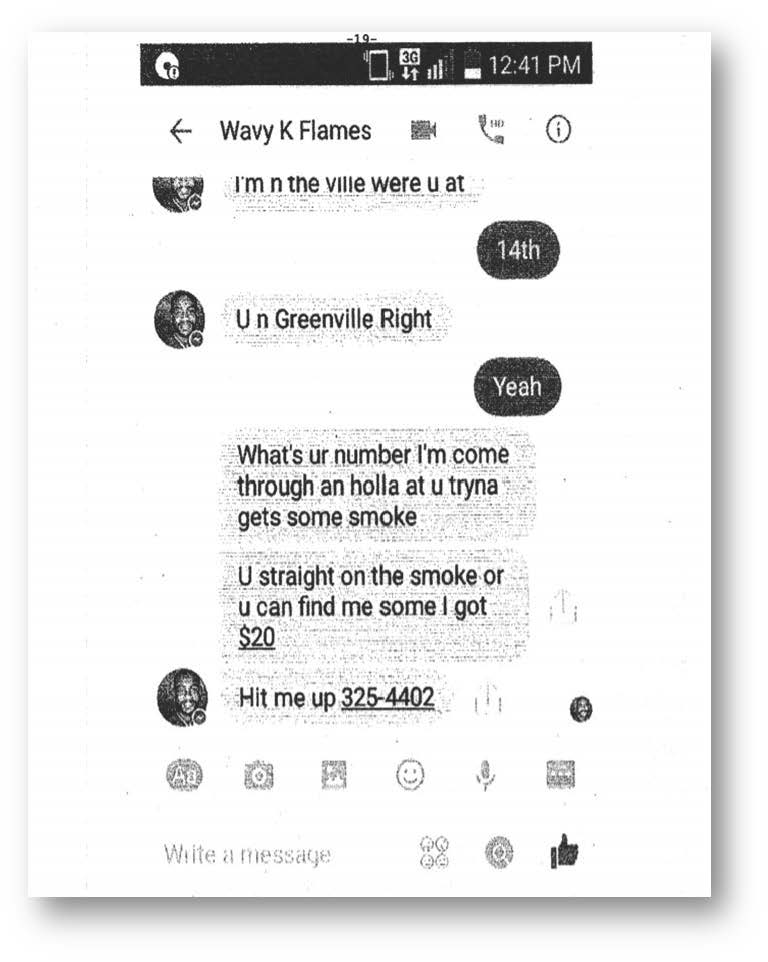
State v. Thompson Tells a Tale of Two Facebook Screenshots

After Roshawn Thompson picked up his cousin Kendall Rascoe from the Greenville mall in November 2014, Thompson and a friend, Andre Grey, robbed Rascoe at gunpoint. At Thompson’s armed robbery trial, his defense attorney sought to cross examine Rascoe about Facebook messages he sent to Thompson earlier in the day asking whether Thompson could get some marijuana for him while he was in Greenville. Rascoe denied sending the message and testified that he just happened to run into Thompson at the mall. The State objected to the admission of the screenshot of the messages.

Later in the trial, the State sought to introduce a screenshot of a picture of Thompson and Grey copied from Thompson’s Facebook page. Rascoe showed the investigating detective the picture for purposes of identifying Thompson and Grey. Thompson objected to the admission of the screenshot, in which both of his middle fingers were extended.

How did the trial court rule?  Did it make the right call?

Prying Open the Jury Room: Supreme Court Creates an Exception to the No-Impeachment Rule for Racial Bias

[Editor’s note: Today’s post was written by Alyson Grine and Emily Coward. Until last year, Alyson was the Defender Educator at the School of Government. She is now an Assistant Professor of Law at NCCU, but she continues to work with the School of Government’s Indigent Defense Education team on the NC Racial Equity Network. Emily is a Research Attorney with the Indigent Defense Education team at the School of Government.]

Summary: In its March 6 opinion in Pena-Rodriguez v. Colorado, the U.S. Supreme Court carved out an exception to the “no impeachment” rule for cases in which a juror makes a clear statement that he or she relied on racial bias in voting to convict a criminal defendant. In such cases, the evidentiary rule preventing the court from hearing juror testimony about statements made during deliberations must give way so that the court may consider whether the alleged racial bias violated the defendant’s Sixth Amendment right to a fair trial. We may be opening ourselves up to accusations that we are seeking to extend our moment in the spotlight by blogging about this case: as mentioned in last week’s News Roundup, the manual we co-authored, Raising Issues of Race in North Carolina Criminal Cases, was cited by Justice Alito in his dissenting opinion. However, as this opinion marks the beginning of a new chapter in the centuries old “no impeachment” rule, it’s important for North Carolina practitioners to understand its implications.