Category: tracking

Cyberstalking via Electronic Tracking Device

Most of us, at one point or another, have dedicated a day of the week to running our personal errands. That day might consist of going to the grocery store, shopping at the mall, or grabbing coffee with a friend. Now imagine on the way home from any of those activities, you get this notification on your iPhone:
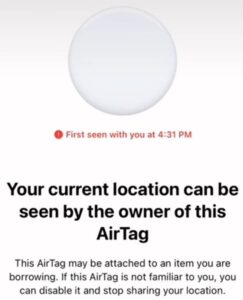
You don’t own an AirTag or probably don’t even know what it is, but it doesn’t take long for you to realize that you’re being tracked. Recently, this has happened to unsuspecting people in Virginia and Arkansas.

While there have not yet been any reported instances in North Carolina, our cyberstalking statute prohibits this type of nonconsensual tracking. This post explores the cyberstalking offense as proscribed by G.S. 14-196.3.

READ POST "Cyberstalking via Electronic Tracking Device"

Advice to Officers After Graham

As I discussed here, the Fourth Circuit recently ruled in United States v. Graham, __ F.3d __, 2015 WL 4637931 (4th Cir. Aug. 5, 2015), that an officer who obtained two suspects’ cell site location information (CSLI) without a search warrant violated the Fourth Amendment. (The officer used a court order based on a lower standard, as purportedly authorized by the relevant federal statute, 18 U.S.C. § 2703(d).) I’ve had a number of practical questions about Graham from officers, agency attorneys, and judges, and I thought that I would collect some of the questions here.

READ POST "Advice to Officers After Graham"

Important New Opinion on Cell Phone Tracking

On Tuesday, the Eleventh Circuit ruled, en banc, that law enforcement may obtain historical cell site location information without a search warrant, using a court order based on less than probable cause. There’s a controversy over what legal standard should govern law enforcement access to location information, and the Eleventh Circuit’s ruling is likely to be influential in the debate. This post explains the issue and puts the new decision in context.

READ POST "Important New Opinion on Cell Phone Tracking"

Stingrays

This weekend, the Charlotte Observer ran this article, entitled Charlotte Police Investigators Secretly Track Cellphones. The article concerns the use of so-called stingrays, also known as IMSI catchers or cell site simulators. They are machines that simulate cell towers and connect with the cellular telephones located nearby. Officers frequently use them to triangulate the location of a suspect – or more precisely, the location of a suspect’s phone. There’s a controversy about the legal status of these devices, which I’ll summarize in this post.

READ POST "Stingrays"