Category: structured sentencing

“Second Look” Sentencing Is Not the Law in North Carolina

Some states have passed laws authorizing judges to review sentences after a defendant has served a specified portion of the sentence. They are sometimes referred to as “second look” laws. A bill proposing a second-look procedure was filed in the General Assembly in 2025, but it was referred to committee and never enacted. See House Bill 589. Nevertheless, judges around the state are receiving dozens of motions for appropriate relief filed under authority of “The Second Look Act” as though it became law. To be clear, no such law was enacted, and motions premised solely on that theory lack a legal basis.

There’s a New King in Town – Finding DWI Aggravating Factors

The U.S. Supreme Court held in Blakely v. Washington, 542 U.S. 296 (2004) that any contested fact that increases the defendant’s sentence beyond the statutory maximum must be submitted to the jury and found beyond a reasonable doubt. Shortly thereafter,  the General Assembly amended G.S. 20-179 to require judges in superior court cases to submit contested aggravating factors during impaired driving sentencing to the jury. Practically, this means that after a person is found guilty of impaired driving, if they are contesting properly alleged aggravating factors, there must be a sentencing hearing before the jury to determine any aggravating factors beyond a reasonable doubt. The North Carolina Supreme Court considered in State v. King, ___ N.C. ___, 906 S.E.2d 808 (2024) what happens if a judge finds contested aggravating factors without submitting them to the jury.

2020 Sentencing Commission Statistical Report Available

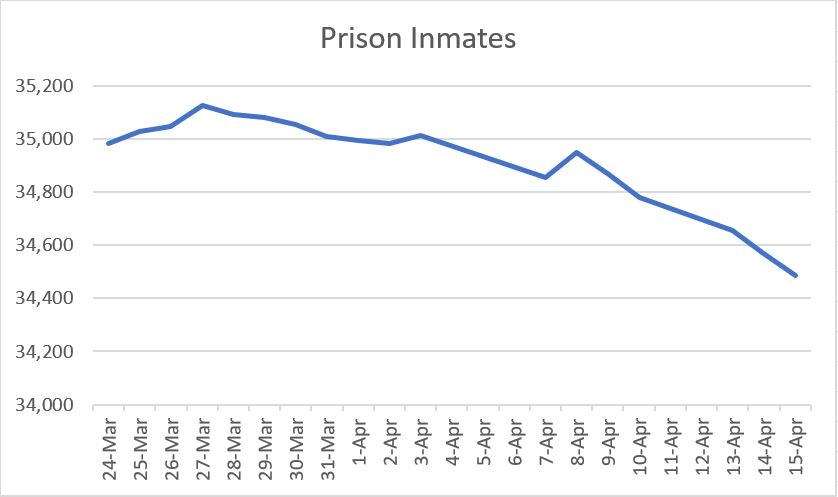
Correctional statistics have been in the news as we consider the impact of the coronavirus on our jails, prisons, and supervised populations. This week the Secretary of Public Safety announced a decision to extend the limits of confinement for certain categories of inmates under G.S. 148-4 (the general plan is outlined here). That (in conjunction with the existing moratorium on new entries) caused the prison population to fall throughout the week. Advocates continue to push for broader releases.

But today’s post isn’t about what’s happening now to get certain inmates out of prison. Instead, it’s a review of the last year’s worth of data on how those inmates got there in the first place. The North Carolina Sentencing and Policy Advisory Commission recently published its annual Structured Sentencing Statistical Report for Felonies and Misdemeanors. Here are the highlights.

A Quarter-Century of Structured Sentencing

The governor has proclaimed today, October 1, 2019, as Structured Sentencing Day. It has been 25 years since North Carolina’s primary sentencing law for felonies and misdemeanors came into effect. Let’s take a moment to reflect on a quarter-century of grid-based sentencing.