Can the Person Protected by a DVPO Be Charged with Violating the Order? (April 27, 2015)
John Rubin
Here’s a question I get occasionally: What language should I use to charge aiding and abetting a violation of a domestic violence protective order (DVPO)? Here’s a similar one: If someone is arrested for aiding and abetting a violation of a DVPO, is the person subject to the 48-hour pretrial release law for domestic violence offenses? I know the scenario immediately.
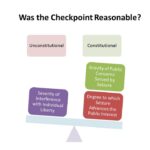 checkpoint’s purpose is to increase police presence in the targeted area while checking for driver’s license and vehicle registration violations. The plan further states that all vehicles traveling through the checkpoint must be stopped unless the officer in charge determines that a hazard has developed or an unreasonable delay is occurring. If that situation arises, all vehicles must be allowed to pass through until the hazard or delay is cleared.